Thematic Inquiry 1: Local impact of a global MOOC
Overview
This thematic inquiry explores the impact of the MOOC series on participants’ perceptions and practice, particularly considering the different ways this manifested in varied contexts. This page offers a summary of the main findings. The fuller version of this thematic inquiry can be downloaded here.
As you review these findings, consider the following questions:
- to be inserted
- to be inserted
- to be inserted
Background and aims
Knowledge alone cannot change practice (Levin, 2008) and teachers go through a complex process of reconstructing new knowledge before it can manifest in change to their perceptions and practice (if at all). There is no simple and generalisable pathway for educators pursuing oTPD to turn new knowledge into new practice, which is particularly the case in an international MOOC with participants from highly varied settings. There is also a risk that because of challenges with adopting resources to make them more relevant for local settings, teachers may favour resources that reinforce their existing perceptions and practices rather than ones that might reorient them (Hood, 2018).
As oTPD opportunities continue to grow, more evidence is needed regarding the phases of knowledge mobilisation beyond the production of more knowledge through oTPD and their associated online networks. This includes an understanding of the mediating factors that influence the knowledge mobilisation process.
This thematic inquiry explores the ways in which the MOOC affected participants’ perceptions and practice. While the wider doctoral study examined the impact of the course at a broad level, it did not collect data on how participants reconstructed the knowledge shared via course content and others’ contributions in order to adapt it to their own contexts. This case study therefore asks three questions that have guided the research:
- How did participants reconstruct the knowledge from the MOOC in order to adapt it to their local settings?
- How did this knowledge reconstruction process impact participants’ perceptions and practices?
- Which course and design factors influenced changes in perceptions and practices?
Methods
This thematic inquiry was used to follow up with participants two years after taking the first MOOC trial. This built on the initial findings and included additional interviews and questionnaires with four participants based in three different countries: the UK, the UAE, and Iran. In addition, 45 reflective reports submitted as final learning products for the third MOOC trial (Course 1: The Fundamentals of Educational Dialogue) were analysed in order to explore other features of impact.
Knowledge mobilisation is used as the conceptual framework for this thematic inquiry to better understand how educators reconstruct knowledge from oTPD courses (see the below figure, which was modified from OECD, 2000). This study takes the position that educators create new knowledge that is relevant to their context through selecting, validating, and collating information and adopting this into their knowledge base. Knowledge can then be actualised through implementation and reflection.
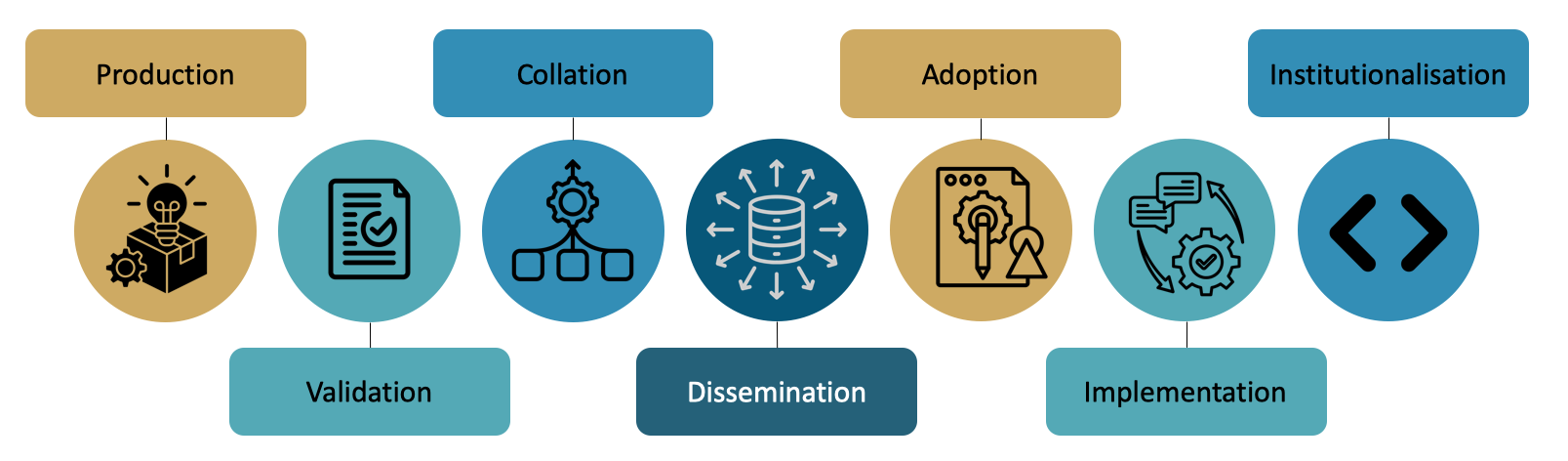
This thematic inquiry additionally draws on teacher agency as a theoretical framework for knowledge mobilisation and takes the position that teachers who are positioned as knowledge creating professionals, and who take active responsibility in developing, testing, refining and mobilising their professional knowledge will be more likely to embed new knowledge into their practice.
Findings
Production
The production of knowledge took place at different times and by different actors, as indicated in the following figure.
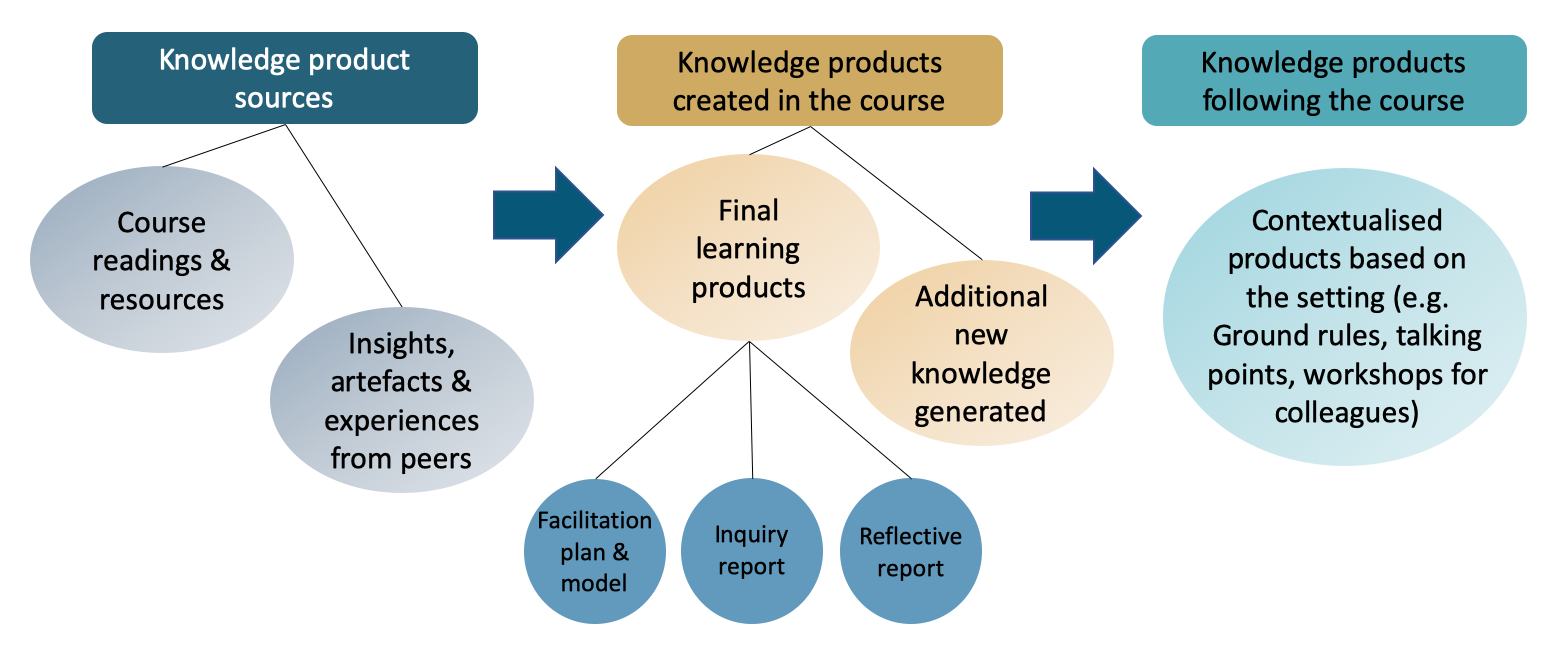
The types of knowledge products that participants found particularly valuable included:
- Practical tools and resources such as videos of teachers utilising a dialogic approach that are coupled with knowledge regarding the principles of dialogic practice;
- Knowledge generated from the collaborative nature of the course design and features that encouraged sharing perspectives and knowledge between participants;
- The development of localised knowledge products to share with colleagues.
Validation
Knowledge validation happened at different points in time during the knowledge mobilisation process and in different ways, as articulated by participants and depicted below.
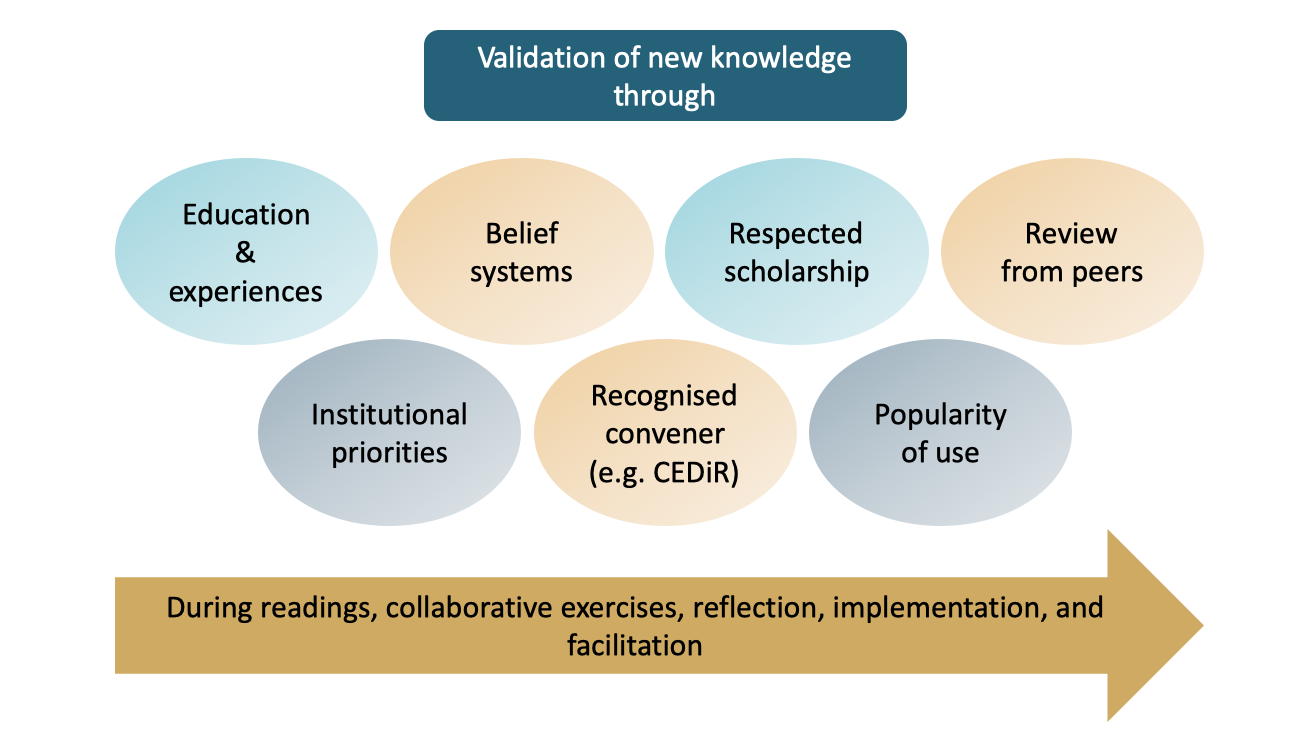
Validating the scholarship provided via the MOOC involved:
- Assessing the quality of the evidence shared and therefore the quality of the pedagogical model which the course strived to impart.
- Once enrolled, the validation process occurred through the reflection of content as it related to their beliefs and understandings.
- Participants also described how the validation process itself contributed to contextualisation and greater understanding.
- Collaboration and communication within the validation process.
- The use of validation as a dialogic tool also became a part of the changing practices of teachers.
Collation
Similar to the validation phase, collating knowledge appeared to be influenced by teachers’ beliefs and their positionality. Participants noted the following:
- Courses should offer scaffolding that provides different resources and levels of support for participants, depending on their settings, interests, and aims.
- Participants should be able to select resources that are most relevant to them.
In the facilitator’s course, course activities included support for participants to collate relevant resources that they planned to share with their colleagues in their settings.
Dissemination
Knowledge dissemination involved the sharing of the knowledge products via the course content and collaborative activities, as well as how the practitioners shared knowledge with their colleagues. Knowledge dissemination was impacted by the previous phases.
Knowledge was disseminated via the course structure through videos, readings, tools and professional resources. Participants described particularly effective elements as:
- Having a clear focus for each week with associated readings and resources;
- Having a timeline in which to review this knowledge to ensure that there was accountability and momentum;
- Utilising a dialogic approach for dissemination.
- Participants also reflected on the role of oTPD as a unique knowledge dissemination tool.
Knowledge was also disseminated through the course via the discussion forum and other collaborative exchanges between peers such as live events and the research buddy programme. However, this also meant that it was not possible for some individuals to access this knowledge; for example, if they encountered language or technical barriers to engage meaningfully in the collaborative elements of the course. Participants also reflected on challenges regarding disseminating knowledge to their colleagues, which often included time constraints and cultural misalignment.
Adoption
Educators will not automatically invite new knowledge into their ways of thinking if they do not have buy-in or motivation to do so. The adoption of knowledge from the MOOC was therefore a result of the careful collation of knowledge products, the dissemination process, as well as individuals’ motivations for engaging in the course. The adoption of new knowledge was enhanced through:
- Relating it to an individual’s beliefs and setting;
- Opportunities for reflection;
- Collaboration with peers within the oTPD course as well as those within institutions.
Implementation
The findings indicate that implementing new knowledge is strengthened through practical resources that can be easily localised, having institutional support including time available for this, and opportunities to collaborate with colleagues. Importantly, participants were able to articulate what worked well and which challenges or barriers remained for the implementation of their new knowledge.
Institutionalisation
Institutionalisation involves knowledge becoming a “sustained, routine practice that is accepted as ‘normal’” (OECD, 2000, p. 40). Factors that appeared to influence the knowledge embedding process include:
- Importance of the role of the local facilitator;
- Having institutional-level support in order to embed knowledge;
- Having confidence through the acquisition of knowledge regarding the fundamental theories behind educational dialogue in order to bring that knowledge to colleagues;
- Managing expectations regarding how change manifests, as this is not quick or simple;
- Engaging different support networks to promote buy-in to the approach, since buy-in is necessary to adopt new learning into practice. These included colleagues as well as parents and community members.
Course design considerations to enable this process include:
- Providing enough structure to ensure that dialogic pedagogy was promoted but not so much structure that it does not allow for agency and creativity;
- Not imposing change, but encouraging everyone to take on a role in the knowledge mobilisation process;
- Having the course structured to encourage deep reflection.
Challenges associated with institutionalisation included losing momentum with colleagues over time.
Discussion of research questions
RQ1: How did participants reconstruct the knowledge from the MOOC in order to adapt it to their local settings?
The findings suggest that the knowledge reconstruction process was not linear and was influenced by a number of factors. This is supported by Levin (2008) who described the relationship between knowledge and use as bidirectional: “practice affects research just as research affects practice” (p. 8). While the process was multidimensional and complex and involved the unique social and cultural environment of the individual, their institution, and wider context, there were cross-cutting themes to highlight regarding this process.
- Participants reconstructed knowledge from the course content and their peers through reflecting on its applicability to their settings and the alignment with their beliefs and practice.
- Participants also brought in alternative perspectives through course peers or their colleagues as part of this reconstruction process. This dialogic component of the knowledge reconstruction process was pivotal for participants to move from adopting the knowledge from the MOOC to implementing it in their practice, and disseminating it to their colleagues.
RQ2: How did this knowledge reconstruction process impact participants’ perceptions and practices?
The knowledge reconstruction process deeply influenced the level of impact seen on participants’ perceptions and practices. Those participants who were able to collaboratively reconstruct knowledge appeared to have higher levels of documented impact on their practice. Having tools that provide the pedagogical principles with easily adapted practical outputs are helpful, but including methods to discuss these tools with others and incorporate their knowledge can make them much more impactful. It is also important to note the varied barriers to knowledge mobilisation. This was most often cited by participants as their availability to undertake the process, lack of institutional support and alignment, inability to access the collaborative features of the course, and a lack of interest and buy-in amongst colleagues.
RQ3: Which course and design factors influenced changes in perceptions and practices?
Commonly referenced features from the course design that appeared to influence the ways in which participants engaged in the knowledge mobilisation process include:
- The use of reflective exercises for participants to engage in consistent deep reflection, documenting positionality, offering opportunities for meaningful collaboration with peers, and promoting the model of local facilitation to encourage institutional buy-in and support.
- Having dialogic pedagogy as the fundamental concept in which the MOOC series engaged particularly lent itself to the knowledge mobilisation process.
- The structure of the course also connects with teacher agency and retaining autonomy through the knowledge mobilisation process.